Climbing Out from Under the Photo Pile
I always knew I had a lot of family photos, tapes, and documents. But I didn’t realize just how much until I gathered everything in one place. That was when it hit me—I wasn’t just a memory-keeper. I was the reluctant archivist of a collection too big to manage.
Pulling everything out and putting it in one place was the easy part. The hard part was deciding what to do with it.
It was too much — too many prints, too many albums, too many stacks of unmarked photos. And then there were the 45,000 digital files waiting for me on my computer. Any joy I once felt in preserving memories had been replaced with the burden of sorting, organizing, and deciding what should stay and what should go.
Why Photo Organizing Never Gets Done
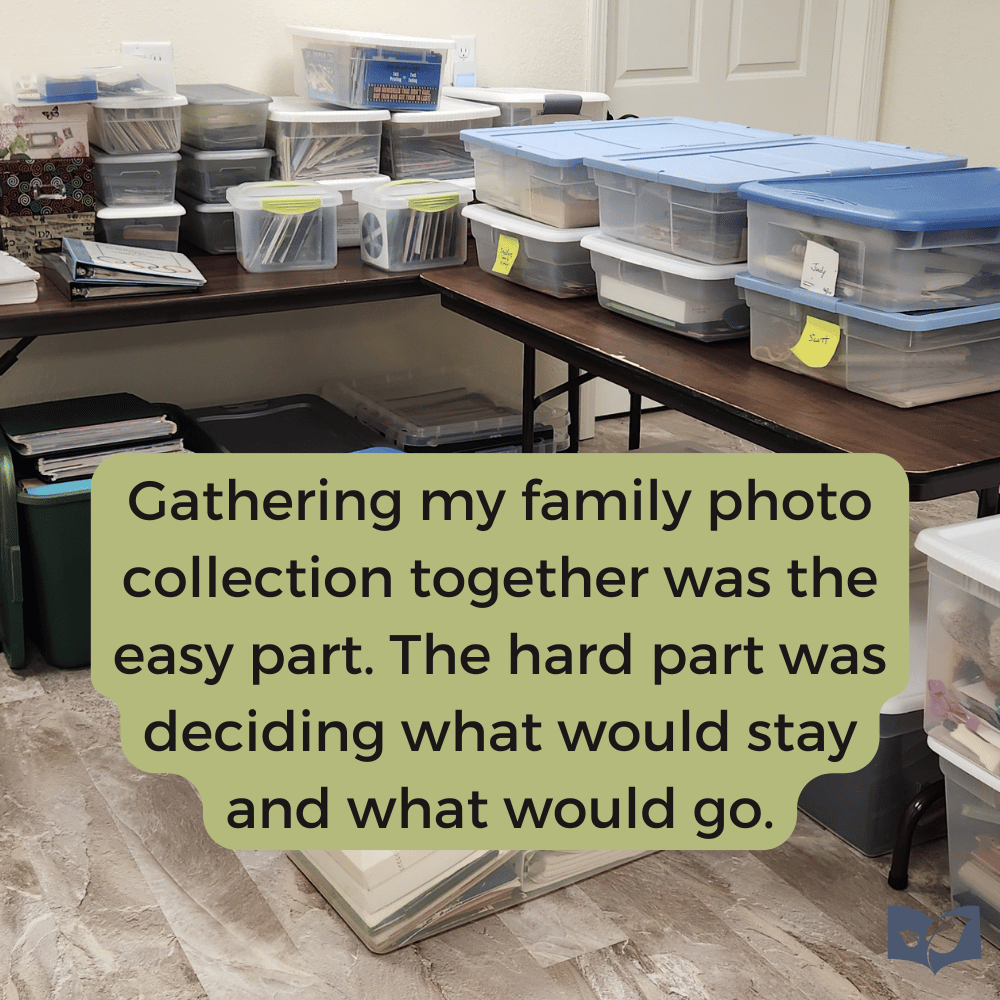
Have you ever felt overwhelmed by your photo collection?
The sheer quantity of pictures that many people accumulate is staggering. Every event, every moment, every time we think — Oh, I should take a picture of this—it all piles up. Digital photography has only made it worse. We don’t have to ration film anymore, so we just keep snapping, promising ourselves we’ll sort it later.
Then there’s the time factor. Even when you try to stay on task, nostalgia gets in the way. I hadn’t made much progress before I found the DVDs of video slideshows I made years ago. Naturally, my husband and I had to watch them all. It was fun. It also completely derailed my progress.
Even when you know what you should do, where do you start? The oldest family photos? Your own childhood? Your kids? Some other milestone? I finally decided to put my parents’ and grandparents’ photos aside and begin photos of my children. That felt like the most immediate priority.
Despite having a plan, there are decisions at every turn. What gets kept? What gets tossed? Do you digitize everything? Just some things? No wonder this task never gets done.
The Loneliness of Memory-Keeping
What makes photo organizing even harder is that it’s a solitary and emotional job.
Yes, sorting through pictures brings back memories, but it also reminds you of what’s gone—people, places, versions of yourself that feel both familiar and distant. And without someone to share those moments with, the weight of them can feel heavier than the boxes themselves.
That’s why I keep interrupting my husband—holding up old snapshots, dropping photos on his desk, forcing him into memory lane whether he’s in the mood or not. And while he humors me, what I really wish for is a community of people going through the same thing.
Making Peace With the Mess
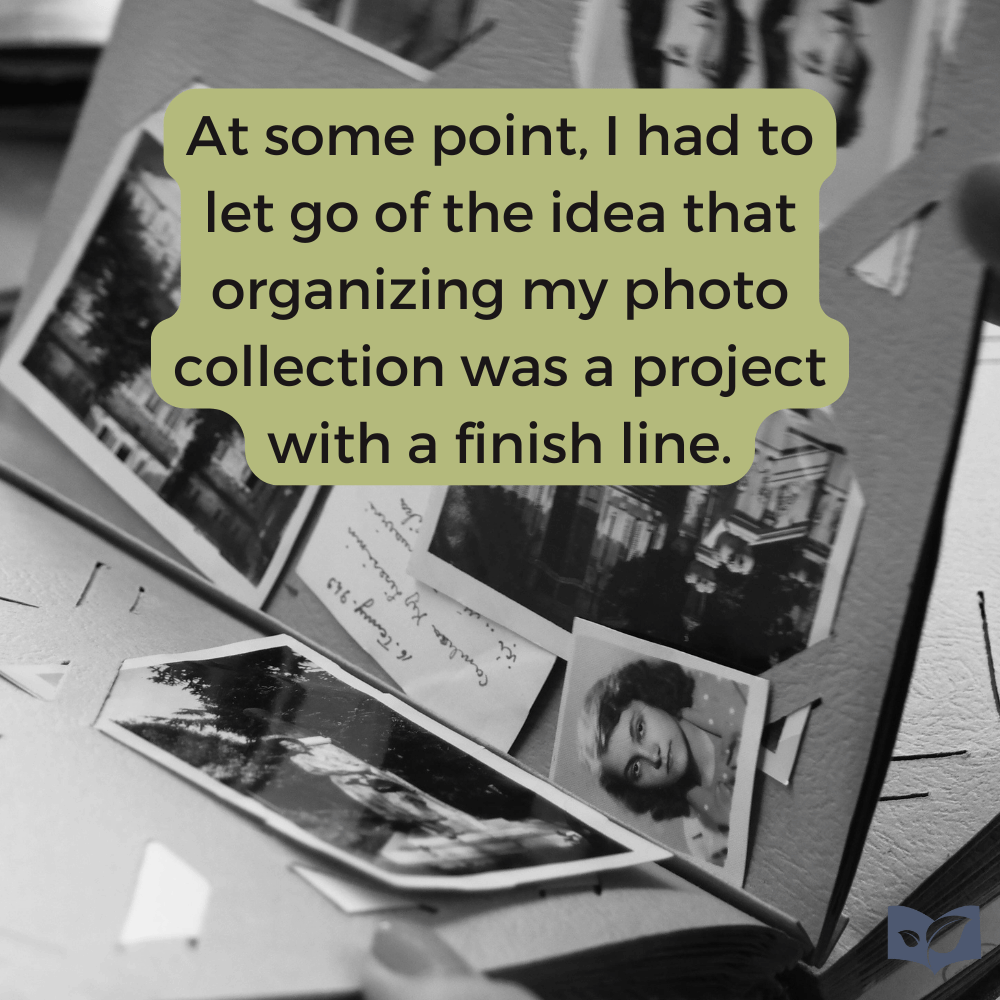
At some point, I had to let go of the idea that this was a project with a finish line. That someday, everything would be neatly labeled, perfectly categorized, and stored in a way that made sense.
Instead, I had to accept that this is an ongoing process.
I won’t keep things just because they’re old. I won’t obsess over perfect dates. I’m not running a museum. I’m focusing on the stories that I want to remember and share — the moments that still make me laugh, the people who shaped my life, the memories I want to hold onto and, someday, pass down.
That shift in mindset helped. So did finding ways to bring other people into the process. Some libraries offer digitization equipment and classes. Online groups provide space to share frustrations, ideas, and small victories. And sometimes, just texting an old photo to a family member is enough to spark a conversation that makes the whole effort feel worth it.
I still have a long way to go. The bins and boxes aren’t disappearing overnight. The digital files aren’t sorting themselves. But this isn’t about perfection. It’s about preserving what matters. And that doesn’t require a flawless system. It just requires a starting point.